Every venue photographs differently. A glass-roofed Victorian hall and a windowless subterranean ballroom are not the same job, and a Tudor palace is a third thing again. The kit changes, the timings change, and so does what good coverage even looks like.
This is a guide to five London venues that regularly host corporate events — what each gives you photographically, and what to brief your photographer on before the day.
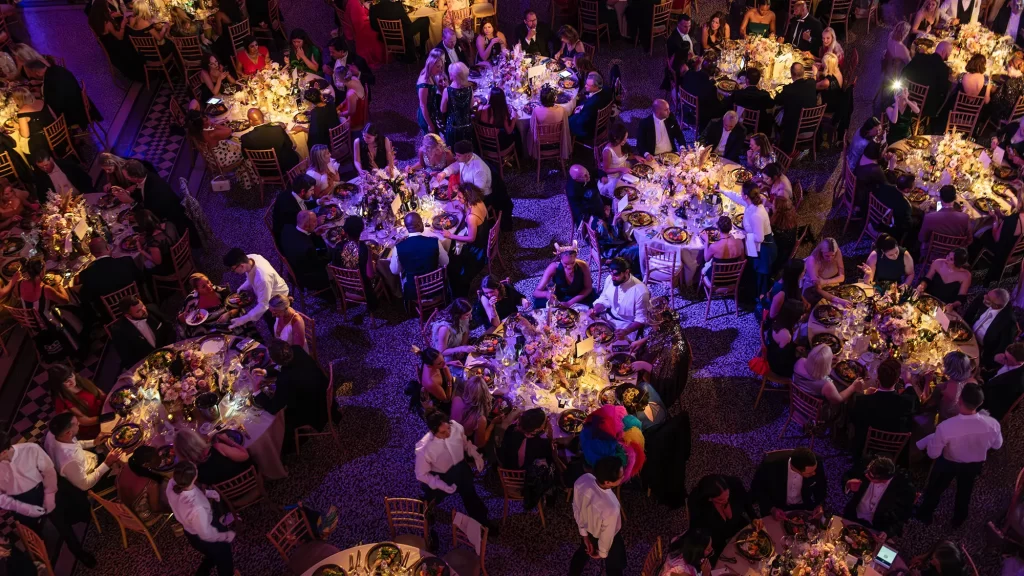
Gala dinner at the Natural History Museum
Olympia
Olympia has come through a £1.3bn redevelopment and is not the venue it was three years ago. Alongside the Grade II-listed heritage halls there is now a purpose-built International Convention Centre, new restaurants and bars, and rooftop spaces that opened in summer 2026.
That matters photographically, because Olympia is now effectively two venues on one site. The Grand Hall keeps its barrel-vaulted glass roof — on a bright day it fills with directional daylight that flatters exhibition stands and networking coverage, and the Victorian ironwork gives backgrounds character no modern conference centre can match. The new ICC is a controlled, contemporary space that behaves completely differently under camera.
Brief your photographer on: which spaces you are actually using. Daylight in the heritage halls shifts significantly through the day, so the running order matters more here than at most venues.
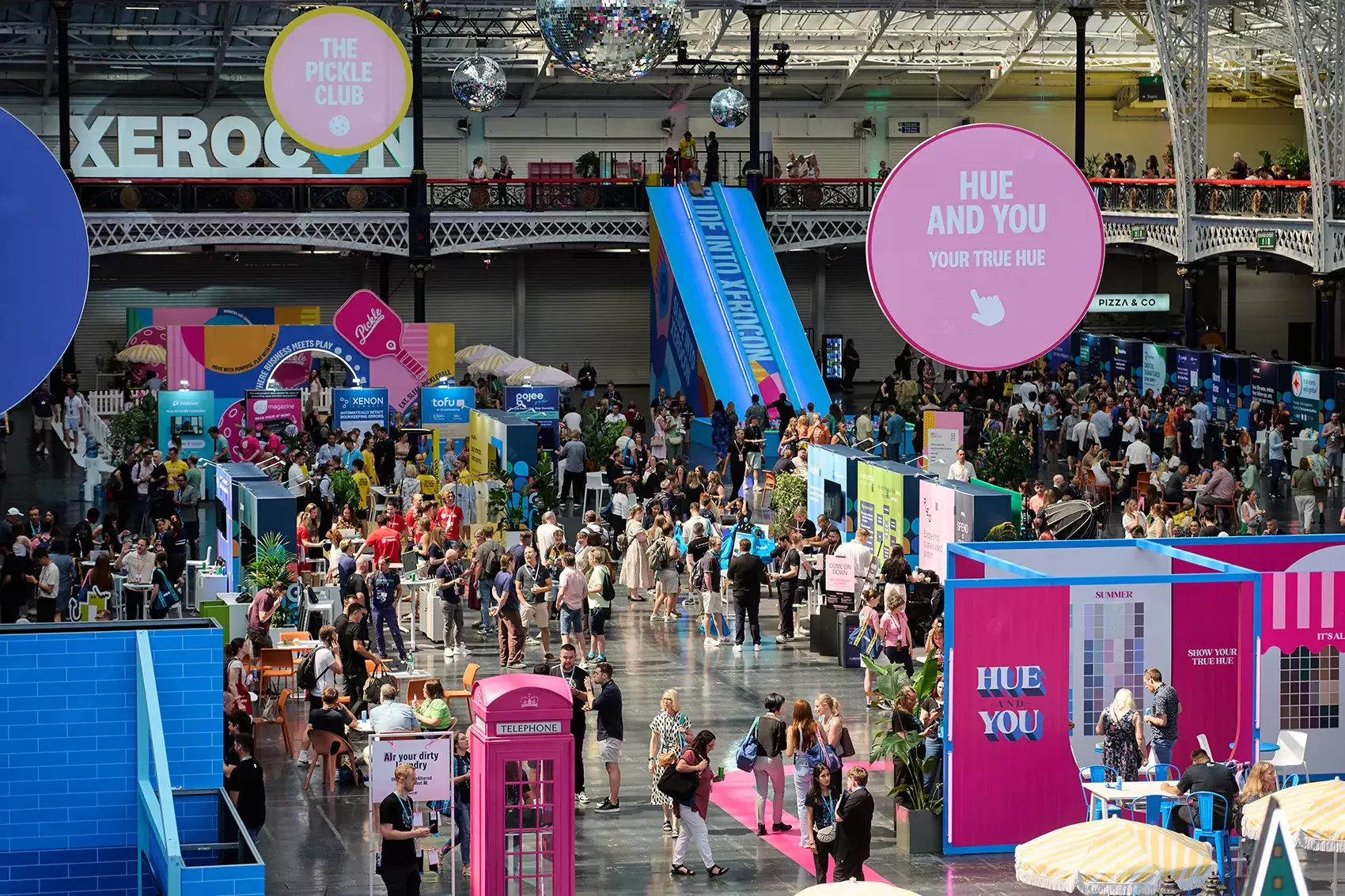
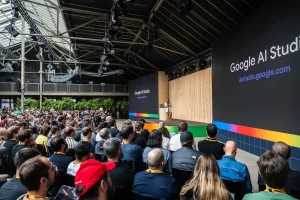
Delegates networking beneath the barrel-vaulted glass roof of the Grand Hall at Olympia
Grosvenor House, Park Lane
The Great Room is one of Europe’s largest ballrooms and one of the most demanding rooms in London to photograph. It sits below ground: no windows, no daylight, no fallback. Everything depends on the production lighting and what the photographer brings.
It is also a home of large awards dinners, which brings its own discipline — a long ceremony, a fast-moving stage sequence, and a room where every table expects to be covered.
Brief your photographer on: the awards running order, and how many winners there are. A stage sequence at this scale is unforgiving; there is no second take once someone has left the podium.
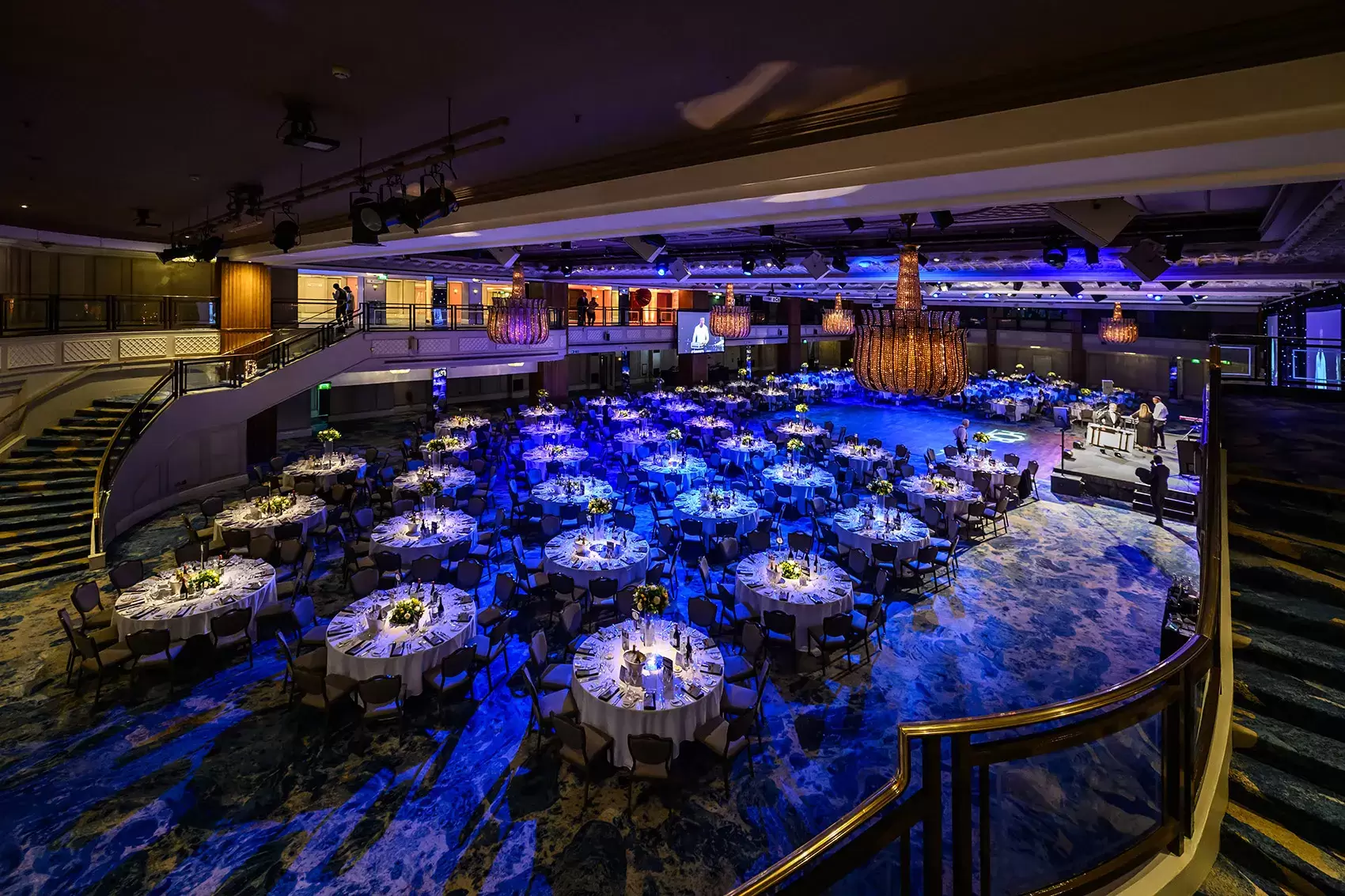
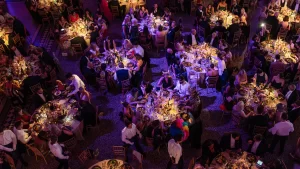
Empty shot before the Awards night at the Grosvenor House
Natural History Museum
Hintze Hall, with the blue whale suspended overhead and Waterhouse’s terracotta arches running the length of the space, produces images no hotel ballroom will match. It is also dark, and the architecture is the point — coverage that lights guests properly but loses the building has missed the reason you booked it.
What works: placing people in dialogue with the space. Delegates dwarfed by the whale. Branding lit against the arches. Restraint, rather than blasting the room with flash.
Brief your photographer on: museum rules. Restrictions on flash, rigging and access are stricter than at commercial venues, and they need confirming in advance rather than discovering on the night.
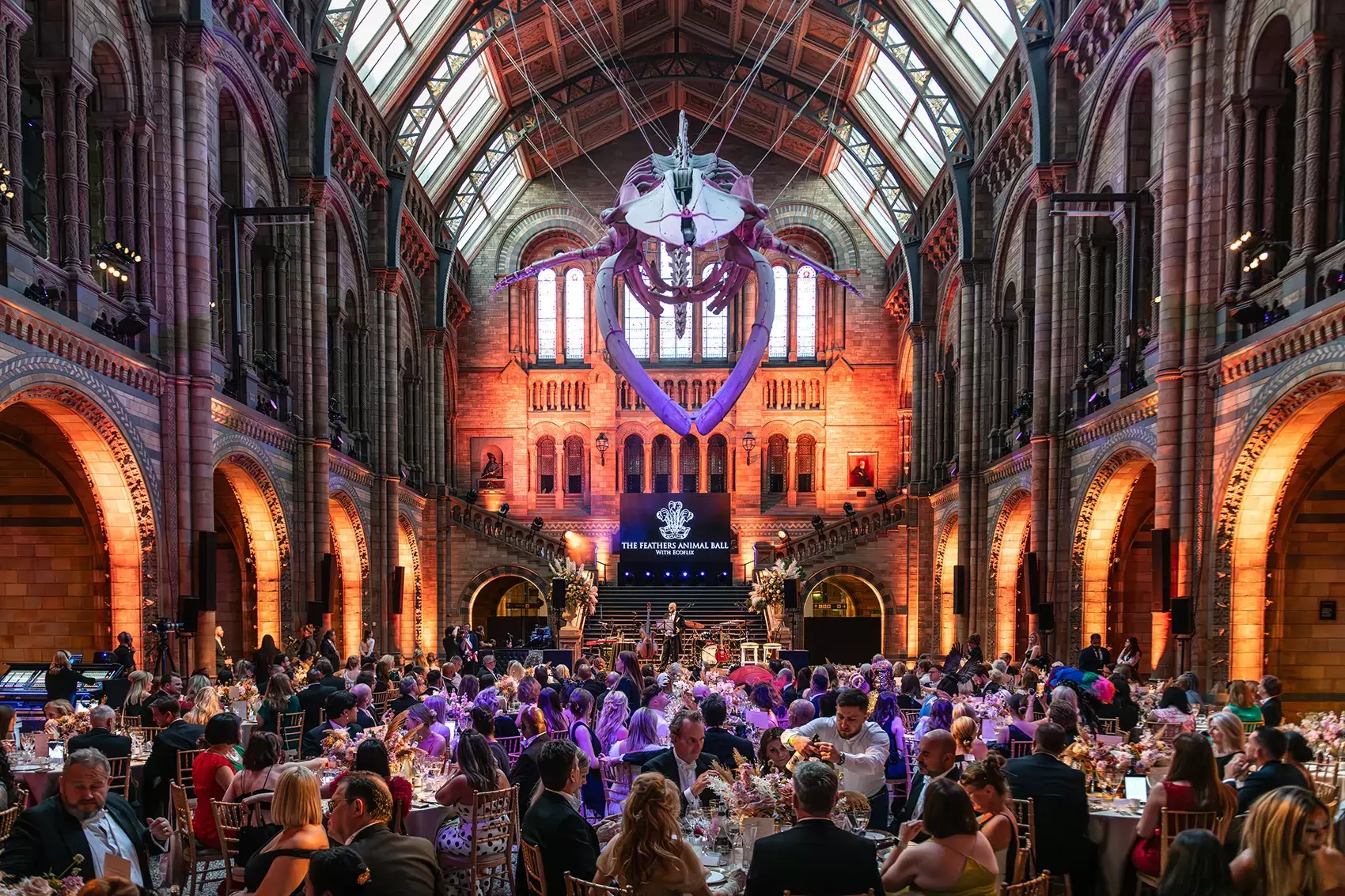
Evening reception in Hintze Hall at the Natural History Museum, guests beneath the suspended blue whale skeleton
Hampton Court Palace
On London’s southwestern edge, and a different proposition again: Tudor interiors, a hammerbeam roof in the Great Hall, and courtyards that photograph beautifully at dusk. As a Historic Royal Palace it carries heritage conservation rules — limits on lighting, on where equipment can go, and on what can be attached to anything at all.
What works: treating the building as a character rather than a backdrop. Working quietly at high ISO. Using the courtyards in the last light of the day, which is when Base Court is at its best.
Brief your photographer on: the palace’s own photography conditions, and the timing of any outdoor coverage. The light window is short and it does not wait for the speeches to finish.
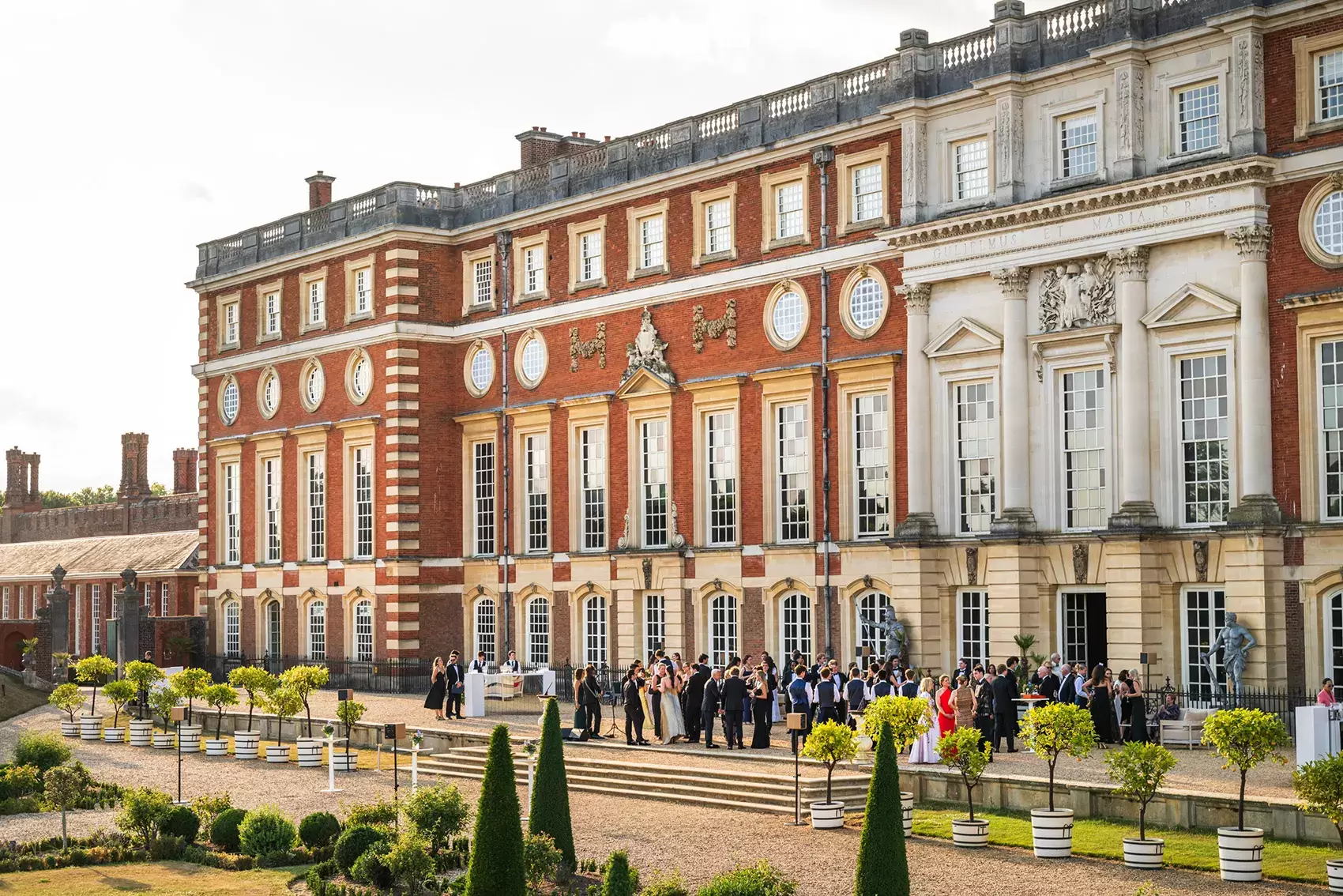
Guests in a courtyard at Hampton Court Palace
ExCeL
Scale is both the opportunity and the problem. The halls are vast, the ceilings high, and the light is a mix of daylight along the central boulevard and artificial light inside the halls — which means white balance changes as you walk.
What works: wide establishing shots that convey scale, which sponsors consistently want. Elevated angles over the exhibition floor. Keynote coverage benefits from scouting the stage lighting early, because it varies enormously between production companies.
Brief your photographer on: distances. Covering a multi-hall event at ExCeL is physically demanding, and the schedule needs to allow ten minutes of transit between sessions. This is the venue where a second photographer most often pays for itself.
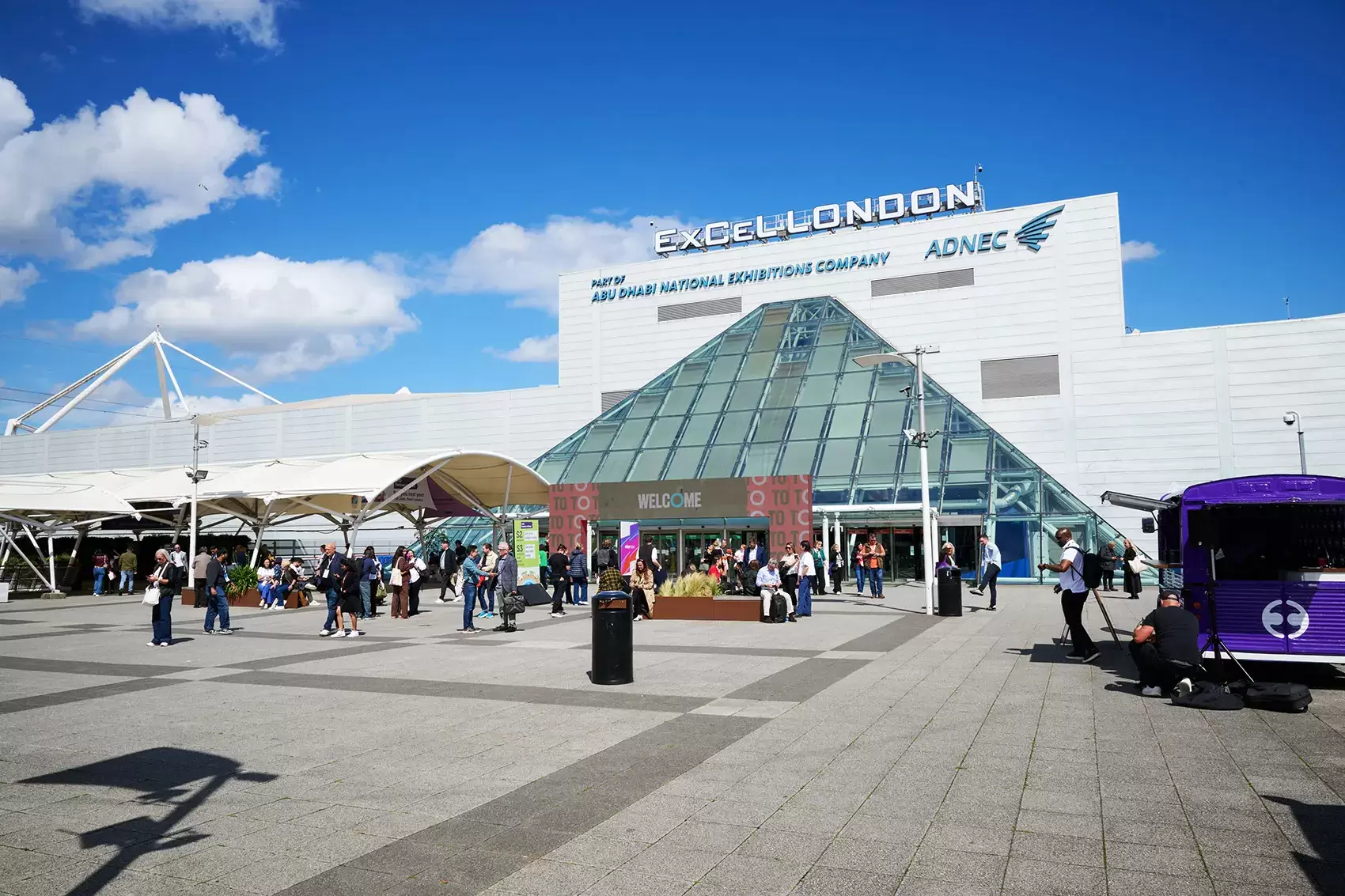
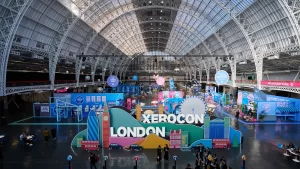
ExCeL main entrance during the coverage for Stripe Europe Tour
The common thread
You chose the venue for a reason. Your photography should make that reason visible — otherwise you have paid for Hampton Court and received images that could have been taken in any function room in the country.
That takes a photographer who understands the room before the doors open. For more on assessing that, see the ten questions to ask before booking a corporate event photographer, and for what coverage costs, my guide to corporate event photography costs in London.
Frequently asked questions
Do photographers need permission to shoot at London event venues?
For private corporate events, photography is usually covered by your event booking. Museums and royal palaces have additional rules on flash, rigging and restricted areas, and these should be confirmed with the venue in advance rather than assumed.
Which London venues are hardest to photograph?
Low-light heritage spaces are the most technically demanding — windowless ballrooms, museum halls and Tudor interiors all require working at high ISO without visible quality loss. These are the venues where a photographer’s experience shows most clearly in the final images.
Does a larger venue cost more to photograph?
Not because of the venue itself. Pricing is driven by hours of coverage. Large multi-hall events often need longer days or a second photographer, which is what changes the fee.
Planning an event at one of these venues? Discuss your event and check availability →